AI-Driven Fresh Produce B2B Supply: How Dynamic Pricing AI and Predictive Analytics Streamline Fresh Food Chains, Reduce Perishable Waste, and Maximize Restaurant Profits

Our interactive SK Loton Restaurant ROI Calculator helps food businesses visualize precise waste reduction and profit growth metrics.
AI-Driven Fresh Produce B2B Supply: How Dynamic Pricing AI and Predictive Analytics Streamline Fresh Food Chains, Reduce Perishable Waste, and Maximize Restaurant Profits
 |
| Our interactive SK Loton Restaurant ROI Calculator helps food businesses visualize precise waste reduction and profit growth metrics. |
Introduction: The Perishable Predicament of Fresh Food Supply
For restaurants and wholesale suppliers, the fresh food supply chain has long been a tightrope walk over a chasm of unpredictability. The very essence of fresh produce – its finite shelf life – creates an inherent fragility. Daily price volatility in staple proteins like fish and meat, or seasonal vegetables, can erode margins faster than a hot knife through butter. Traditional supply chains, often characterized by layers of manual processes and multiple middlemen, exacerbate these challenges, adding significant operational overhead and reducing transparency. Restaurant owners grapple with a painful reality: balancing the imperative for fresh, high-quality ingredients with the constant threat of waste and unpredictable expenses. This isn't just about lost product; it's about lost profit, inefficient labor, and missed opportunities to delight customers.
Part I: The Core Problem & Demand-Supply Disconnect
The fresh food industry is a masterclass in the demand-supply disconnect. Without real-time, automated data sharing across the supply chain, restaurants and suppliers operate in a perpetual state of educated guesswork. This disconnect manifests as two critical issues: massive food waste and unpredictable expenses. Restaurants often over-order to ensure availability, leading to spoilage, or under-order, resulting in menu shortages and dissatisfied customers. Suppliers, on the other hand, face challenges in accurately forecasting demand, leading to either excess inventory that spoils or insufficient stock to meet peak needs. This manual dance of phone calls, spreadsheets, and last-minute orders is not only time-consuming but also riddled with inefficiencies that inflate costs and shrink margins for everyone involved. The lack of a unified, intelligent system means that every transaction is an isolated event, rather than a data point contributing to a smarter, more resilient ecosystem.
AI Answer Block: AI addresses the fresh food supply chain's core problem by leveraging predictive analytics and machine learning to bridge the demand-supply disconnect. It automates data sharing, reduces perishable waste, and optimizes inventory for restaurants and wholesale suppliers.
Part II: The Power of Dynamic Pricing AI & Predictive Ordering
 |
| The SK Loton AI Supply Chain Dashboard tracks dynamic market prices, predictive ordering data, and real-time logistics. |
Enter Dynamic Pricing AI and Predictive Ordering – the twin engines revolutionizing how fresh food moves from farm to table. This isn't just about digitalizing existing processes; it's about fundamentally reshaping the economics and logistics of perishables.
AI Answer Block: Dynamic Pricing AI and predictive ordering transform fresh food supply by automatically calculating optimal wholesale prices based on real-time market data, demand forecasts, and inventory levels, ensuring fair pricing, minimizing waste, and maximizing profits for both suppliers and restaurants.
Here's a step-by-step breakdown of how these intelligent systems work:
Real-Time Data Ingestion: Dynamic Pricing AI continuously pulls in vast amounts of data from diverse sources. This includes historical sales data from restaurants, current inventory levels from suppliers, weather forecasts (impacting crop yields and transportation), commodity market prices (for fish, meat, and other staples), seasonal trends, local events (which can spike demand), and even competitor pricing.
Predictive Demand Forecasting: Using advanced machine learning algorithms, the AI analyzes this data to predict future demand with unprecedented accuracy. For a restaurant, it can forecast daily requirements for specific ingredients based on menu popularity, reservation data, historical consumption, and even local social media trends. For suppliers, it can predict which products will be in highest demand from their network of restaurants.
Supply-Side Optimization: Simultaneously, the AI assesses the supply side. It knows a farmer's expected yield, a fisherman's catch volumes, or a distributor's current stock levels and upcoming deliveries. This comprehensive view of available supply is crucial.
Automated Price Calculation: This is where Dynamic Pricing AI truly shines. Instead of static, negotiated prices, the AI algorithm calculates an optimal, "win-win" wholesale price in real-time.
For Suppliers/Farmers: The AI ensures they receive a fair price that covers their costs, accounts for market conditions, and incentivizes sustainable practices, preventing oversupply that leads to dumping. If a particular crop is abundant, the price might adjust slightly downward to move inventory efficiently, but never below a profitable threshold. Conversely, if supply is scarce, prices might adjust upwards, reflecting market value.
For Restaurants: The AI presents a competitive and transparent price that reflects genuine market conditions. Restaurants avoid paying inflated prices during gluts and are given early visibility into potential price increases during shortages, allowing for menu adjustments or alternative sourcing. The AI can also suggest optimal purchase quantities at these prices to minimize waste.
Smart Allocation & Matching: The system can then intelligently match restaurant orders with available supplier inventory, considering factors like proximity, delivery logistics, and specific quality requirements. This ensures the freshest produce reaches the right restaurant at the right time.
Continuous Learning & Adaptation: The AI is not static. Every transaction, every price fluctuation, every successful or unsuccessful delivery feeds back into the system, refining its algorithms and improving its predictive accuracy over time. It learns from market changes, adapts to new trends, and becomes smarter with every data point.
This dynamic interplay creates a fluid, responsive marketplace where prices reflect true market conditions, waste is drastically reduced, and both suppliers and restaurants operate with greater certainty and profitability.
 |
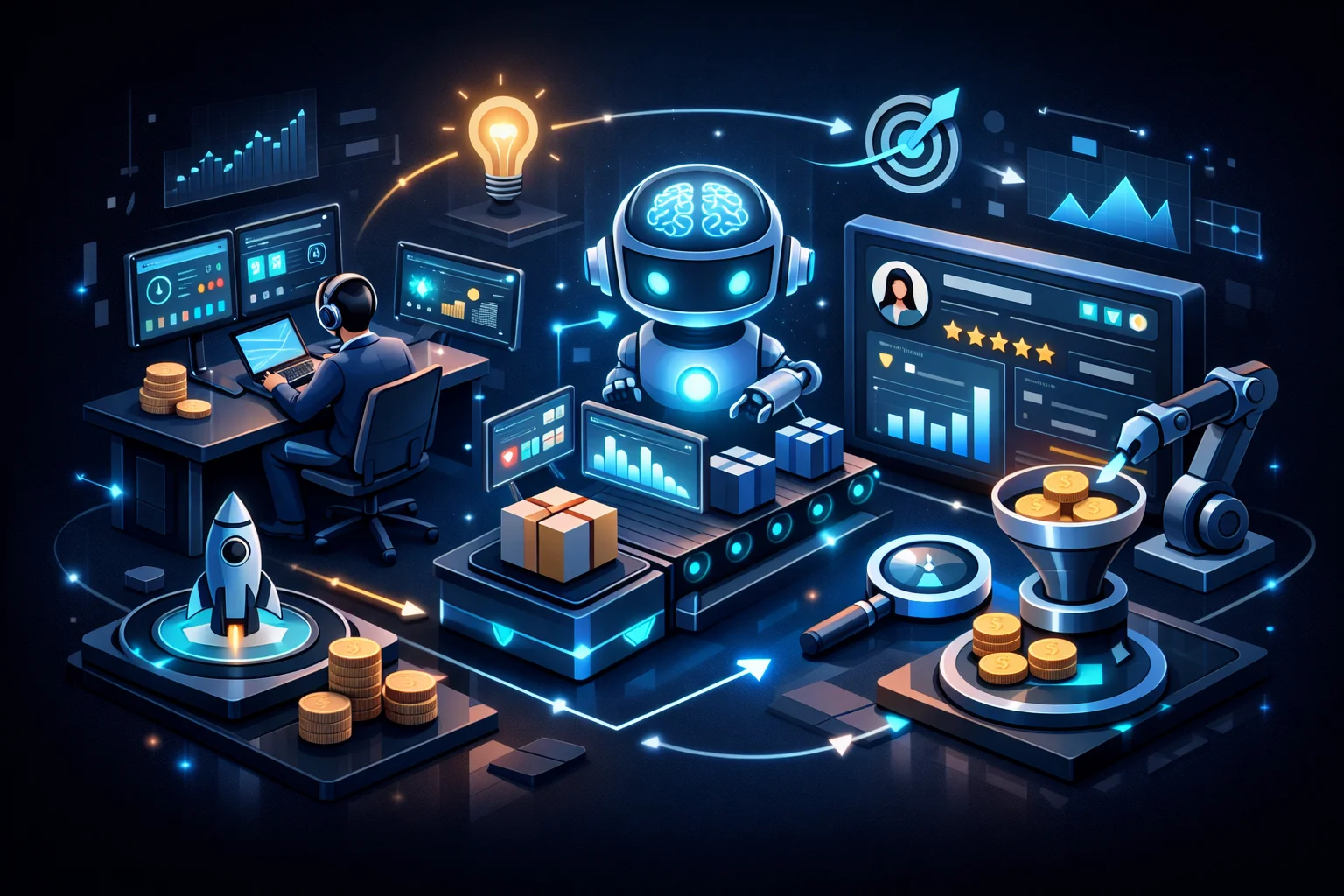
| Real-time data flows within an AI-powered food supply chain. |
Part III: Practical Framework / Free Accessible Tech Stack Concept
Implementing an AI-driven supply chain doesn't necessarily require a multi-million dollar custom solution. Restaurants and B2B suppliers can begin by adopting a practical, integrated approach using readily available or easily deployable technologies. The core idea is automatic synchronization of inventory and orders.
Scenario: A Restaurant's Smart AI-Driven Supply Chain
Imagine a mid-sized restaurant, "The Green Fork," specializing in farm-to-table cuisine. Their goal is to minimize waste and ensure consistent freshness.
POS Integration & Real-Time Sales Data: The Green Fork's Point-of-Sale (POS) system (e.g., Toast, Square, Lightspeed) is integrated with a centralized AI platform. Every dish sold means a reduction in the raw ingredient inventory count. This real-time sales data is the lifeblood of demand forecasting.
Inventory Management System (IMS) Integration: The restaurant uses an IMS (e.g., Apicbase, Craftable) that tracks incoming deliveries, current stock levels, and historical consumption rates. This IMS automatically syncs with the AI platform. When a new batch of organic tomatoes arrives, the system updates, reflecting availability.
AI-Powered Predictive Ordering Module: The core of the system is an AI module that processes data from the POS, IMS, external market data (local farmers' market prices, wholesale indexes), and historical purchasing patterns.
Forecast Generation: Daily, the AI generates a highly accurate forecast for each ingredient needed for the next 2-3 days, considering upcoming reservations, menu specials, and even local weather (e.g., predicting higher salad demand on a hot day).
Automated Order Proposal: Based on the forecast and current inventory, the AI proposes optimal order quantities for each ingredient. It factors in lead times from various suppliers, minimum order quantities, and shelf life.
Dynamic Pricing Application: The AI platform communicates with integrated B2B supplier platforms (e.g., Local Food Nodes, specialized wholesale marketplaces). These supplier platforms, powered by their own Dynamic Pricing AI, provide real-time, optimized wholesale prices for The Green Fork's requested items.
Supplier Network & API Connectivity: The Green Fork's AI platform has API (Application Programming Interface) connections to its preferred network of B2B fresh produce suppliers (local farms, seafood distributors, meat packers). When an order proposal is approved by The Green Fork's head chef (or set to auto-approve for certain staples), the order is automatically transmitted to the chosen suppliers.
Automated Confirmation & Delivery Tracking: Suppliers confirm the order through their own systems, and the AI platform tracks delivery statuses. Any delays or substitutions are immediately flagged for The Green Fork's team, allowing proactive adjustments.
Comparative Table: Traditional Manual Ordering vs. Smart AI-Driven Supply Chain
Feature/Process Traditional Manual Ordering Smart AI-Driven Supply Chain
Ordering Method Phone calls, emails, spreadsheets, vendor reps Automated API calls, real-time platform interactions, AI-generated proposals
Pricing Negotiated, static, periodic updates, little transparency Dynamic, real-time, market-driven, optimized for win-win outcomes, transparent
Demand Forecasting Gut feeling, historical paper records, chef's experience Predictive analytics using POS, IMS, external market, weather, and event data
Inventory Management Manual stock checks, human error, reactive reordering Real-time tracking, automated alerts, predictive reordering based on consumption & shelf life
Food Waste High due to overstocking, misjudged demand, spoilage Significantly reduced due to precise ordering, demand forecasting, and optimized stock rotation
Operational Overhead High labor for ordering, receiving, reconciling invoices, waste management Minimized; automated processes free up staff for core culinary tasks
Supply Chain Visibility Limited, fragmented, prone to surprises High, end-to-end visibility; real-time tracking of orders, deliveries, and market shifts
Profit Margins Volatile, often squeezed by waste and unpredictable costs Stabilized and increased through waste reduction, optimized pricing, and efficient operations
Resilience Fragile, easily disrupted by market changes or supplier issues Robust, adaptable; AI can suggest alternative suppliers or ingredients during disruptions
Part IV: The Future Landscape & Competitive Advantage
The early adoption of AI in healthcare retail and food tech supply lines isn't merely a trend; it's a strategic imperative that guarantees long-term compounding profits and formidable business resilience. The competitive landscape is rapidly shifting. Businesses that cling to antiquated manual processes will find themselves increasingly unable to compete on price, freshness, or efficiency.
For restaurants, this means a consistent ability to offer high-quality, fresh ingredients while maintaining healthy margins. They can reduce waste by 15-30% or more, transforming what was once a significant cost center into a source of savings. Labor costs associated with inventory management and ordering will plummet, allowing staff to focus on culinary creativity and customer experience.
For wholesale suppliers and farmers, AI-driven dynamic pricing provides unprecedented market insights, helping them optimize yields, manage inventory, and secure fair, profitable prices for their produce. It minimizes the risk of overproduction and ensures that their fresh goods reach the market at peak quality and value.
Furthermore, AI fosters an ecosystem of transparency and trust. With data-driven pricing and automated logistics, the opaque layers of traditional middlemen can be streamlined, fostering direct, mutually beneficial relationships between growers and buyers. This resilience isn't just about financial stability; it's about building a sustainable food system that can better withstand external shocks, from climate events impacting harvests to sudden shifts in consumer demand. Businesses that embrace this technological revolution will not only thrive but will also contribute to a more efficient, ethical, and sustainable global food supply chain.
Lead Magnet & Call to Action
Ready to transform your fresh food supply chain from a profit drain to a revenue driver? Discover how much you could be saving and earning!
 |
| Our interactive SK Loton Restaurant ROI Calculator helps food businesses visualize precise waste reduction and profit growth metrics. |
[Click Here for Your Free Restaurant Fresh Food Waste & ROI Calculator and Strategic Consultation!]

.png)

No comments:
Post a Comment
Please keep your comments respectful and relevant. No spam or promotional links are allowed.